Electrical Repairs • Suffolk County, NY
Some home maintenance tasks are perfectly reasonable to handle yourself. Electrical repairs are different. Once a project involves wiring, breakers, new circuits, the electrical panel, or an unexplained electrical problem, knowing when to stop and call a licensed electrician can be just as important as knowing what is wrong.
Homeowners can safely keep an eye on their electrical system, test certain built-in safety devices, replace light bulbs, inspect visible cords, and pay attention to changes in how their home is behaving.
But diagnosing and repairing electrical wiring is another matter.
This guide explains which electrical issues are reasonable for homeowners to check, which ones should be left to a professional, and the warning signs that may indicate a larger electrical problem in your Suffolk County home.
The Simple Rule
If the task requires opening electrical wiring, adding or altering a circuit, working inside the electrical panel, replacing breakers, diagnosing repeated failures, or working around energized electrical components, call a licensed electrician.
Homeowner electrical safety should be focused primarily on observation, testing built-in safety devices, and recognizing problems, not attempting repairs beyond your experience.
DIY Check or Call an Electrician?
Here is a practical way to think about some of the most common electrical situations homeowners encounter.
| Electrical Situation | Reasonable Homeowner Step | When to Call an Electrician |
|---|---|---|
| Burned-Out Light Bulb | Replace the bulb with one appropriate for the fixture. | If new bulbs repeatedly fail, flicker, buzz, or the fixture becomes unusually hot. |
| One Tripped Breaker | Turn off or unplug equipment on the circuit and reset the breaker once. | If the breaker trips again or trips repeatedly. |
| GFCI Outlet Trips | Use the TEST and RESET buttons as intended. | If it will not reset, repeatedly trips, or does not respond correctly when tested. |
| Damaged Extension Cord | Stop using it and replace the cord. | If damage involves permanent wiring, an outlet, appliance connection, or wall wiring. |
| Warm Outlet | Stop using the outlet if it feels unusually warm or hot. | Have the outlet and circuit evaluated, especially with odor, discoloration, buzzing, or loose plugs. |
| Flickering Light | Check whether the bulb is properly installed and whether the issue is limited to one fixture. | If flickering affects multiple fixtures, rooms, or circuits, or happens repeatedly. |
| Dead Outlet | Check for a tripped breaker or nearby GFCI that needs to be reset. | If power does not return or the outlet repeatedly stops working. |
| Outlet or Switch Replacement | Do not attempt it unless you have the appropriate electrical knowledge and experience. | Call an electrician if wiring needs to be disconnected, diagnosed, repaired, or altered. |
| New Outlet or Circuit | Not a basic homeowner maintenance task. | Have a licensed electrician install the circuit and evaluate electrical capacity. |
| Electrical Panel Work | Homeowners can visually observe the outside of the panel and notice unusual sounds, odors, or heat. | Breaker replacement, wiring, repairs, service work, and panel upgrades should be handled professionally. |
| EV Charger Installation | Choose the charger and installation location. | Have an electrician evaluate the panel, available capacity, dedicated circuit, wiring, and installation requirements. |
| Generator Wiring | Homeowners can discuss backup-power goals and equipment options. | Electrical connections, transfer equipment, and permanent generator wiring should be professionally installed. |
Electrical Checks Homeowners Can Do Without Repairing Wiring
There is still plenty you can do to keep tabs on your home’s electrical system without becoming your own electrician.
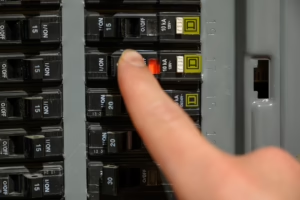
Reset a Tripped Breaker Once
A breaker can occasionally trip when too many high-demand devices are being used on one circuit.
If you know what caused the overload, turn off or unplug some of the equipment before resetting the breaker.
But a breaker that immediately trips again or repeatedly trips during normal use should not simply be reset over and over.
A breaker is a safety device. If it keeps tripping, the goal should be to find out why, not to keep forcing the circuit back on.
Test and Reset GFCI Outlets
GFCI outlets are specifically designed with TEST and RESET controls for checking the operation of the device.
The U.S. Consumer Product Safety Commission recommends regularly testing GFCI protection, while electrical safety guidance from ESFI recommends monthly testing.
If a GFCI outlet will not reset, repeatedly trips, feels hot, or does not respond when tested, have the device and circuit inspected.
Replace Light Bulbs
Replacing a burned-out light bulb is normal homeowner maintenance.
Use a bulb that is appropriate for the fixture and follow the fixture manufacturer’s wattage or lamp requirements.
If bulbs repeatedly burn out unusually quickly, the fixture flickers, makes noise, or becomes excessively hot, the problem may extend beyond the bulb itself.
Replace Damaged Extension Cords
You do not repair a damaged extension cord by covering exposed or deteriorating sections and continuing to use it.
Replace cords that have:
- Cracked insulation
- Exposed conductors
- Damaged plugs
- Burn marks
- Melted areas
- Loose connections
Extension cords should also be temporary solutions rather than permanent substitutes for properly located electrical outlets.
Pay Attention to Changes
One of the most useful things a homeowner can do is notice when the electrical system starts behaving differently.
Pay attention to:
- Lights that suddenly begin flickering
- Breakers that trip more frequently
- Outlets that stop working
- Switches that buzz or crackle
- Plugs that no longer fit securely
- Electrical components that feel unusually warm
- Unusual electrical odors
- Power loss affecting part of the house
Those observations can be extremely helpful when an electrician begins troubleshooting the problem.
When Should You Call an Electrician?
Once a problem moves beyond a simple homeowner check, professional troubleshooting is usually the safer and more useful next step.
When a Breaker Keeps Tripping
A breaker that repeatedly trips may be responding to an overloaded circuit, faulty appliance, short circuit, ground fault, wiring issue, failing breaker, or another electrical problem.
Determining which one is responsible requires more than repeatedly flipping the breaker back on.
Repeated Trips Are the Important Part
One breaker trip with an obvious temporary overload is different from a circuit that shuts off repeatedly during normal use. If the same breaker keeps tripping, have the circuit diagnosed.
When an Outlet or Switch Feels Warm
A noticeably warm or hot outlet can indicate excessive heat somewhere in the device, wiring, or connection.
This deserves more attention if you also notice:
- Burning odors
- Discoloration
- Buzzing or crackling
- A loose receptacle
- Plugs that no longer fit securely
- Repeated breaker trips
If you are dealing with this problem, see: Outlet Feels Warm? What It Means and When to Call an Electrician .
When Lights Keep Flickering
A single flickering bulb may have a simple fixture or bulb-related explanation.
Flickering across multiple rooms or circuits is different.
Widespread or recurring flickering can involve:
- Loose electrical connections
- Individual circuits
- The electrical panel
- The electrical service
- Large changes in electrical load
- Utility-side issues
Read our complete guide to common causes of flickering lights in your house .
When Lights Dim as Large Equipment Starts
High-demand equipment can cause a brief change in voltage when it starts.
However, significant dimming, dimming that affects much of the house, or a symptom that is getting progressively worse deserves further evaluation.
Homeowners commonly notice this when central air conditioning starts.
See our guide: Lights Dim When the AC Turns On: Is It Normal? .
When an Outlet Suddenly Stops Working
Before calling an electrician, you can check whether a breaker has tripped or whether a GFCI protecting the circuit needs to be reset.
If those basic checks do not restore power, the problem may involve:
- The receptacle itself
- A loose connection
- A wiring problem
- An upstream GFCI
- A breaker problem
- Another device feeding the circuit
At that point, professional troubleshooting makes more sense than replacing parts at random.
When You Smell Something Burning
A burning or unusual electrical odor should not be treated as a normal inconvenience.
If you can safely do so without approaching damaged or overheating equipment, stop using the affected circuit or device and contact an electrician.
Smoke, visible fire, severe sparking, or an immediate threat to people or property should be treated as an emergency.
When You Hear Buzzing or Crackling
Electrical panels, outlets, switches, and other electrical devices should not suddenly develop loud buzzing, sizzling, popping, or crackling sounds.
Those sounds can indicate a loose or failing electrical connection and should be investigated rather than ignored.
When Part of the House Loses Power
If several circuits lose power but the entire neighborhood has not experienced an outage, the problem may involve more than one individual breaker.
Possible causes can involve:
- The electrical panel
- Electrical service equipment
- A service connection
- A larger wiring fault
- The utility supply
Sudden partial power loss is a good reason to stop troubleshooting at the homeowner level and have the problem properly diagnosed.
Electrical Projects That Should Be Handled Professionally
Some electrical projects go beyond troubleshooting and involve permanently changing the electrical system.
These projects deserve proper planning, installation, and evaluation of the home’s existing electrical system.
New Electrical Circuits
A new circuit involves much more than adding another outlet.
The circuit needs the appropriate:
- Breaker
- Wire size
- Overcurrent protection
- Grounding
- Routing
- Device selection
- Protection required for the location and use
The electrical panel also needs to have the space and capacity to support the addition.
Electrical Panel Repairs and Upgrades
The electrical panel is not an appropriate DIY workspace.
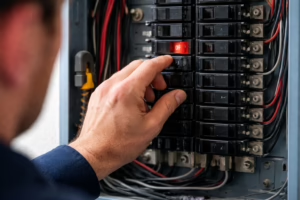
Homeowners can observe the outside of the panel and notice problems such as repeated breaker trips, buzzing, unusual heat, odors, rust, or signs of moisture.
Repairs inside the panel, breaker replacement, panel replacement, and electrical service upgrades should be handled by a qualified electrician.
HomeOps provides:
Level 2 EV Charger Installation
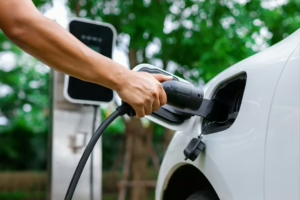
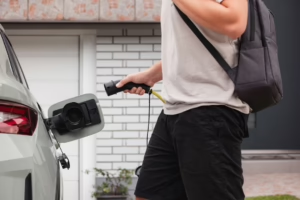
Installing a home EV charger often requires a dedicated circuit and an evaluation of the home’s existing electrical capacity.
Depending on the home and charger, the electrician may need to consider:
- Existing service size
- Electrical panel capacity
- Available breaker space
- Charger amperage
- Wire and circuit requirements
- Distance from the panel
- Indoor or outdoor installation
- Whether load management or an electrical upgrade is needed
This is exactly the type of project where evaluating the electrical system first can prevent problems later.
Standby Generator and Transfer Equipment
A permanently installed backup generator must safely interact with the home’s electrical system and utility power.
Generator wiring, transfer equipment, permanent connections, and associated electrical work should be professionally designed and installed.
Rewiring and Renovation Electrical Work
Kitchen remodels, additions, finished basements, home offices, and larger renovations may require new circuits, lighting, outlets, appliance connections, and changes to existing wiring.
Having an electrician involved early can also help determine whether the existing panel and electrical service have enough capacity for the renovation.
Why Professional Electrical Troubleshooting Matters
Electrical symptoms do not always reveal the actual source of the problem.
A dead outlet might be caused by the outlet itself, but it could also be related to an upstream connection, GFCI, breaker, or damaged wiring elsewhere on the circuit.
A breaker that keeps tripping might be overloaded, but the cause could also be a faulty appliance, wiring fault, damaged equipment, or failing breaker.
Professional troubleshooting is about identifying why the electrical system is behaving differently before deciding what needs to be repaired.
Good Troubleshooting Comes Before Good Repair
Replacing the first outlet, switch, breaker, or fixture that appears suspicious does not guarantee the underlying problem has been found.
A qualified electrician can evaluate the symptoms, circuit, electrical panel, connected equipment, and wiring as needed to determine what is actually causing the issue.
What About Electrical Permits in Suffolk County?
Permit and inspection requirements can vary depending on the type of electrical work and the municipality where the property is located.
Larger electrical projects may involve permits, inspections, or other local requirements.
Before hiring an electrical contractor, homeowners can also verify available licensing information through the Suffolk County Consumer Affairs license and complaint search .
A qualified local electrician should be able to explain whether the work you are considering requires a permit or inspection and how that process will be handled.
When DIY Electrical Work Becomes a Bad Idea
Stop and call an electrician if the project or problem involves:
- Opening or altering permanent electrical wiring
- Working inside the electrical panel
- Replacing or adding breakers
- Adding a new circuit
- Repeated breaker trips
- Burning odors
- Hot outlets, switches, breakers, or panel equipment
- Buzzing, crackling, or arcing
- Visible electrical damage
- Whole-home or multi-room flickering
- Partial power loss
- EV charger circuits
- Generator wiring
- Electrical service upgrades
- Panel replacement
- Rewiring or renovation circuits
- Any electrical problem you do not fully understand
Knowing when not to DIY is part of good home maintenance.
What Electrical Safety Organizations Recommend
The Electrical Safety Foundation International recommends hiring a qualified, licensed electrician to perform electrical work in the home. The U.S. Consumer Product Safety Commission similarly advises homeowners to identify electrical warning signs and have defective electrical systems assessed and repaired by qualified electrical professionals.
You can review additional homeowner electrical safety information from ESFI and the U.S. Consumer Product Safety Commission .
Related HomeOps Electrical Repair Guides
If you are trying to figure out whether an electrical symptom deserves a service call, these HomeOps resources go deeper into some of the most common problems Suffolk County homeowners experience.
- Outlet Feels Warm? What It Means and When to Call an Electrician
- Flickering Lights in Your House: Common Causes
- Lights Dim When the AC Turns On: Is It Normal?
- Electrical Panel Repair in Suffolk County
- Electrical Panel Upgrades in Suffolk County
- Electrical Repairs & Troubleshooting in Suffolk County
Not Sure If Your Electrical Problem Needs a Professional?
HomeOps Electric provides electrical troubleshooting and repairs throughout Suffolk County, Long Island.
Our electricians help homeowners diagnose tripping breakers, dead outlets, flickering lights, panel problems, electrical odors, power loss, overloaded circuits, wiring issues, and other electrical problems.
We also handle larger projects including electrical panel upgrades, new circuits, EV charger installations, generator wiring, lighting, surge protection, and residential electrical upgrades.
HomeOps Electric is licensed and insured in Suffolk County under License #5153ME.
DIY Electrical Repair FAQs
What electrical work can a homeowner safely do?
Homeowners can generally focus on basic maintenance and observation, such as replacing appropriate light bulbs, testing GFCI devices with their built-in TEST and RESET buttons, replacing visibly damaged extension cords, checking for a tripped breaker, and watching for changes in how the electrical system behaves. Work involving permanent wiring, breakers, circuits, or the electrical panel should be left to someone with the appropriate electrical training and experience.
Can I reset a breaker that has tripped?
A breaker can generally be reset once after turning off or unplugging equipment that may have overloaded the circuit. If the breaker immediately trips again or repeatedly trips during normal use, stop resetting it and have the circuit evaluated.
Why does my circuit breaker keep tripping?
Repeated breaker trips can be caused by an overloaded circuit, short circuit, ground fault, faulty appliance, damaged wiring, failing breaker, or another electrical issue. Professional troubleshooting can determine the actual cause rather than repeatedly resetting the breaker.
Can I replace an electrical outlet myself?
Replacing a receptacle involves permanent electrical wiring and proper connections. If you do not have the appropriate electrical knowledge and experience, hiring a licensed electrician is the safer option. This is especially important when the existing outlet is hot, damaged, discolored, loose, or part of a circuit already experiencing problems.
Should I call an electrician for a warm outlet?
An outlet that becomes noticeably warm or hot should be evaluated, particularly when the heat appears with discoloration, buzzing, odor, loose plugs, sparking, or repeated breaker trips. Stop using an outlet that appears damaged or unsafe until the cause has been determined.
Do flickering lights mean I need an electrician?
One flickering bulb may be related to the bulb or fixture. Flickering that affects multiple rooms, occurs frequently, becomes progressively worse, or appears with other electrical problems can indicate a circuit, wiring, panel, service, or utility issue and should be investigated.
Can I install my own Level 2 EV charger?
A Level 2 charger may require a new dedicated circuit and an evaluation of the home’s panel and available electrical capacity. Permanent charger wiring, circuit installation, and electrical system modifications should be handled by a qualified electrician.
When is an electrical problem an emergency?
Smoke, visible fire, significant sparking, severe overheating, burning odors, arcing sounds, or an immediate danger to people or property should be treated urgently. Avoid using affected electrical equipment and contact a licensed electrician. If there is an active fire or immediate threat to safety, leave the area and contact emergency services.
The Bottom Line
You do not need to call an electrician every time a light bulb burns out or a GFCI needs to be reset.
But once the issue involves permanent wiring, a breaker that repeatedly trips, unexplained power loss, overheating, electrical odors, panel work, new circuits, or equipment that significantly increases the electrical load on your home, professional troubleshooting is the better next step.
The goal is not to avoid every DIY task. It is to recognize the point where basic homeowner maintenance ends and electrical work begins.