EV Charger Installation
Yes, it may be possible to install an EV charger on a 100 amp electrical panel, but it depends on your home’s total electrical load, available panel capacity, charger amperage, and whether your existing panel is safe and up to date.
Many Long Island homeowners are adding electric vehicles to homes that were built long before EV charging was common. If your home has a 100 amp panel, the most important question is not just whether there is room for another breaker. The real question is whether your electrical system can safely support the added demand of a Level 2 EV charger.
In some homes, a licensed electrician may be able to install a Level 2 charger on a 100 amp panel using the right circuit size, charger settings, or load management options. In other homes, a panel upgrade may be the safer and more reliable long-term solution.
Quick Answer
You can sometimes install an EV charger on a 100 amp panel, but only after a licensed electrician confirms that the panel has enough available capacity. If the panel is already overloaded, outdated, full, damaged, or supporting many high-demand appliances, you may need a subpanel, load management device, lower-amperage charger setup, or full electrical panel upgrade.
Why a 100 Amp Panel Can Be Tricky for EV Charging
A 100 amp panel was common in many older homes, but modern electrical needs have grown. Today, homes often use central air, electric dryers, electric ranges, heat pumps, sump pumps, pool equipment, home offices, finished basements, smart devices, and now EV chargers.
A Level 2 EV charger can be one of the larger electrical loads in the home. Because of that, adding one to a 100 amp panel requires careful planning. The electrician needs to make sure the charger does not push the panel beyond what it can safely handle.
This is especially important on Long Island, where many homes have older electrical systems, additions, finished garages, renovated kitchens, added HVAC equipment, or older panels that may already be close to capacity.
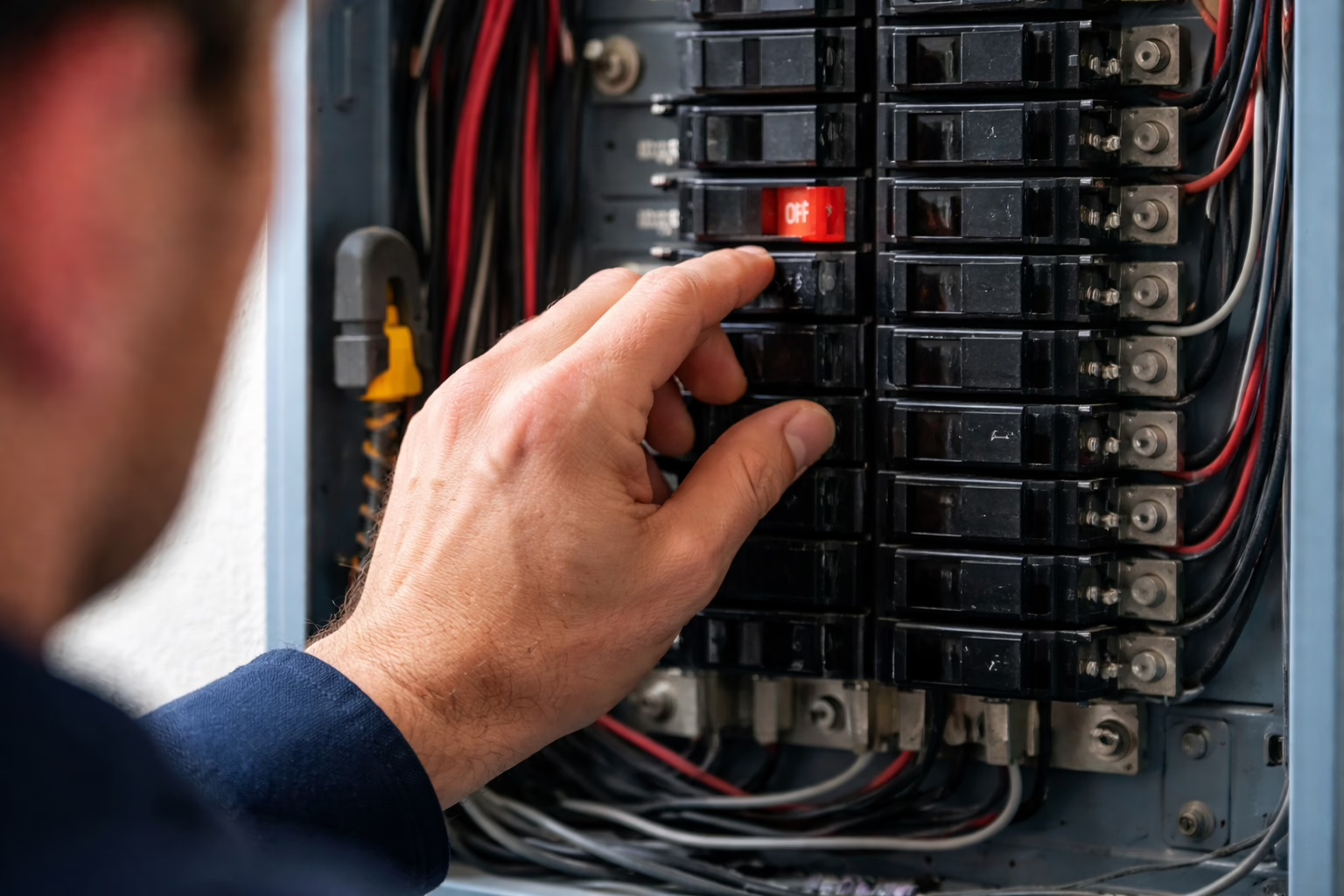
Does an Open Breaker Slot Mean My Panel Can Handle an EV Charger?
No. An open breaker slot does not automatically mean your panel can handle a Level 2 EV charger.
Breaker space and electrical capacity are two different things. Your panel may physically have room for another breaker, but that does not mean your home has enough available electrical capacity for a new high-demand circuit.
Before installing an EV charger, a licensed electrician should evaluate the full panel, existing loads, service size, wiring condition, and charger requirements. This is where a load calculation becomes important.
What Is a Load Calculation?
A load calculation helps determine how much electrical demand your home already uses and whether there is enough remaining capacity for an EV charger. It looks at the size of your electrical service, major appliances, HVAC equipment, existing circuits, and other electrical loads.
This matters because EV chargers are typically considered a continuous load. That means the electrical system needs to be sized properly for safe charging over longer periods of time.
Without a load calculation, it is easy to underestimate how much strain a charger can place on an older or already busy 100 amp panel.
Common Situations Where a 100 Amp Panel May Work
Some 100 amp panels may be able to support an EV charger, depending on the home. This is more likely when the home has fewer large electrical loads and the panel is in good condition.
- The panel is newer and in good condition
- The home has gas heat, gas cooking, or gas appliances
- The charger can be installed at a lower amperage
- The panel has available capacity after a load calculation
- The wiring run is reasonable and installation conditions are straightforward
- A load management device can safely control charging demand
In these cases, the electrician may recommend a dedicated EV charger circuit without replacing the entire panel. However, the final decision should be based on the actual electrical load of the home.
Common Situations Where a Panel Upgrade May Be Needed
A 100 amp panel may not be enough if the home already has heavy electrical demand. Adding an EV charger to a panel that is near capacity can lead to nuisance tripping, overheating risks, failed inspections, or unsafe wiring conditions.
- The panel is outdated, damaged, rusted, or unsafe
- The panel is already full or overcrowded
- Breakers trip frequently
- The home has central air, electric heat, or heat pumps
- The home has an electric dryer, electric range, hot tub, pool equipment, or other large loads
- The EV charger requires a higher-amperage circuit
- The home is being renovated or more electrical upgrades are planned
In these situations, a 200 amp panel upgrade may be recommended. A larger panel can provide more capacity for EV charging and other modern electrical needs.
100 Amp Panel vs 200 Amp Panel for EV Charging
A 100 amp panel may be enough for some homes, but a 200 amp panel usually gives homeowners more flexibility for EV charging, HVAC equipment, appliances, generators, additions, and future electrical upgrades.
For more on that topic, read our guide: 100 Amp vs 200 Amp Electrical Panel: What’s Right for Your Home?
Can You Use a Lower-Amperage EV Charger on a 100 Amp Panel?
Sometimes, yes. Some Level 2 chargers can be configured for different amperage levels. A lower-amperage setup may charge more slowly than a higher-powered Level 2 charger, but it may be a practical option when the panel has limited available capacity.
For example, not every home needs the fastest possible charging speed. If you usually charge overnight and drive a predictable daily distance, a lower-amperage Level 2 setup may still be much more convenient than using a standard outlet.
The charger, breaker, wiring, and panel capacity all need to match. This is not a guesswork decision. A licensed electrician should size the circuit correctly and confirm that the setup is safe.
What About Load Management Devices?
A load management device may help some homeowners install an EV charger without upgrading the entire electrical service. These devices are designed to monitor electrical demand and limit or pause EV charging when the home is using too much power.
Load management can be useful in certain 100 amp homes, but it is not the right solution for every panel. The existing electrical system still needs to be evaluated for safety, condition, and code compliance.
If your panel is old, damaged, overloaded, or poorly installed, load management should not be used as a shortcut around needed electrical upgrades.
Can I Charge an EV With a Regular Outlet Instead?
Many EVs can charge from a standard household outlet, often called Level 1 charging. However, Level 1 charging is much slower than Level 2 charging. For some drivers, it may be enough for light daily use. For others, it can be frustrating and impractical.
A Level 2 charger is usually the better home charging setup because it provides faster and more reliable charging. That is why many EV owners eventually decide to install a dedicated 240-volt charging circuit.
How Much Does EV Charger Installation Cost With a 100 Amp Panel?
The cost depends on whether your panel can support the charger as-is or whether additional electrical work is needed. A standard Level 2 EV charger installation in Long Island commonly ranges from $800 to $3,500 for labor and materials.
More complex installations can cost $4,000 or more when longer wiring runs, panel upgrades, subpanels, outdoor conduit, trenching, or service changes are required.
| Installation Situation | What It May Mean | Potential Cost Impact |
|---|---|---|
| 100 amp panel has available capacity | A dedicated Level 2 circuit may be possible. | May fall within a standard installation range. |
| Panel is full but otherwise safe | A subpanel or circuit adjustment may be needed. | Can increase labor and materials. |
| Panel is overloaded or outdated | A panel upgrade may be recommended. | Can make the project more complex. |
| Long wiring run or detached garage | More wiring, conduit, labor, or trenching may be required. | Can push the project into a higher cost range. |
Should I Upgrade From 100 Amps to 200 Amps Before Installing an EV Charger?
It depends on your home. If your 100 amp panel is safe, has enough available capacity, and your charging needs are modest, a full upgrade may not be required.
However, upgrading to a 200 amp panel may make sense if your home is older, your panel is already near capacity, you want faster Level 2 charging, or you plan to add more electrical equipment in the future.
A 200 amp upgrade can be especially helpful if you are also planning renovations, central air upgrades, heat pumps, a standby generator, a hot tub, kitchen upgrades, or additional circuits.
The Big Question: Is Your Panel Ready?
The safest way to know if your 100 amp panel can support an EV charger is to have it inspected by a licensed electrician. The electrician can perform a load review, check available breaker space, inspect the panel condition, and recommend the safest option for your home.
Why Professional EV Charger Installation Matters
EV charger installation should not be treated like a simple outlet installation. A Level 2 charger requires the correct breaker, wiring, grounding, mounting, charger settings, and panel capacity.
Improper installation can lead to overheating, damaged equipment, nuisance tripping, electrical hazards, or problems during inspection. It can also reduce the reliability of your home charging setup.
A licensed electrician can help you choose an installation method that matches your home, your charger, your vehicle, and your long-term electrical needs.
Questions to Ask Before Installing an EV Charger on a 100 Amp Panel
Before moving forward with EV charger installation, it helps to answer a few basic questions:
- Is my electrical panel 100 amps or 200 amps?
- Does the panel have open breaker space?
- Does the home have enough available electrical capacity?
- Will the charger be installed indoors or outdoors?
- How far is the charger location from the panel?
- What amperage does the charger require?
- Do I want faster charging now or future flexibility later?
These answers help determine whether a standard installation, lower-amperage setup, load management option, subpanel, or panel upgrade is the best path.
Related HomeOps EV Charger Resources
Planning a home charging setup? You may also want to read our guides on EV charger installation cost in Long Island and whether you need a panel upgrade for an EV charger.
Can I Install an EV Charger on a 100 Amp Panel? The Bottom Line
You may be able to install an EV charger on a 100 amp panel, but it depends on your home’s electrical load and panel condition. Some homes can support a Level 2 charger with a dedicated circuit, lower-amperage charger setting, or load management solution. Other homes need a panel upgrade before EV charging can be added safely.
The best next step is to schedule a professional electrical evaluation. HomeOps Electric can inspect your panel, review your charger location, and help determine the safest and most practical EV charger installation option for your Long Island home.
Need EV Charger Installation in Suffolk County or Long Island?
HomeOps Electric installs Level 2 EV chargers and evaluates electrical panels for homeowners across Suffolk County and nearby Long Island communities. Whether your home has a 100 amp panel, 200 amp panel, or needs an upgrade, our team can help you plan a safe charging setup.
EV Charger on a 100 Amp Panel FAQs
Can I install a Level 2 EV charger on a 100 amp panel?
Sometimes. A Level 2 EV charger may be possible on a 100 amp panel if the home has enough available electrical capacity and the panel is in safe condition. A licensed electrician should inspect the panel and perform a load review before installation.
Does a 100 amp panel always need to be upgraded for an EV charger?
No. Not every 100 amp panel needs to be upgraded for EV charger installation. Some homes can support a charger with the right circuit size, charger settings, or load management solution. Other homes may need a panel upgrade if the panel is overloaded, outdated, or already near capacity.
Is an open breaker space enough for an EV charger?
No. An open breaker space does not automatically mean your panel has enough capacity for an EV charger. The home’s total electrical load, panel condition, service size, and charger requirements all need to be reviewed.
Can I use a lower-amperage EV charger on a 100 amp panel?
In some cases, yes. Some Level 2 chargers can be configured for lower amperage, which may make installation more practical for a home with limited electrical capacity. The circuit still needs to be installed and sized by a licensed electrician.
What happens if my 100 amp panel cannot support an EV charger?
If your 100 amp panel cannot safely support an EV charger, your electrician may recommend a panel upgrade, subpanel, load management device, or different charger setup depending on your home and charging needs.
How much does EV charger installation cost with a 100 amp panel?
A standard Level 2 EV charger installation in Long Island commonly ranges from $800 to $3,500 for labor and materials. Complex installations, including long wiring runs, subpanels, or panel upgrades, can cost $4,000 or more.
Who should check if my panel can handle an EV charger?
A licensed electrician should inspect your panel, review your home’s electrical load, check the charger requirements, and determine whether your panel can safely support a Level 2 EV charger.