


Electrical Panel Installation, Repair and Upgrades in Suffolk County
Your electrical panel is not a single-purpose component. It has to distribute power safely today, support the equipment you plan to add tomorrow and remain serviceable when a breaker or connection fails. HomeOps evaluates the complete system before recommending installation, repair or a capacity upgrade.
New Electrical Panel Installation
A new panel installation may be appropriate for a new home, addition, major renovation, accessory structure or project that changes how electricity is distributed through the property. The work begins with load planning—not simply choosing the largest panel on the shelf. We review the utility service, expected circuits, heating and cooling equipment, cooking appliances, water heating, laundry, workshops, pools, EV charging and backup-power plans.
Panel selection includes the service rating, breaker spaces, compatibility with the electrical system and room for reasonable future expansion. The enclosure must be located with the required working clearance and protected from conditions that could damage it. Feeders, grounding, bonding, neutral conductors and branch circuits are arranged and identified so the system is safe to operate and easier to service later.
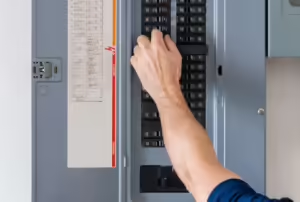
During installation, the HomeOps team coordinates the new equipment with the existing wiring and the project schedule. Where permits, utility coordination or inspections apply, those requirements become part of the plan. After installation, breakers and circuits are checked, panel labeling is reviewed and the work is explained so the homeowner understands the new system.
Electrical Panel Repair and Troubleshooting
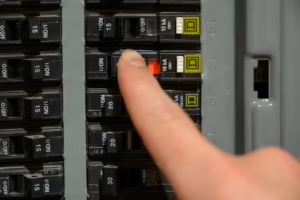
Not every panel problem requires a full replacement. A tripping breaker, damaged individual breaker, loose termination or isolated circuit problem may be repairable when the panel itself is in serviceable condition and compatible replacement components are available. The important first step is identifying the real source of the symptom.
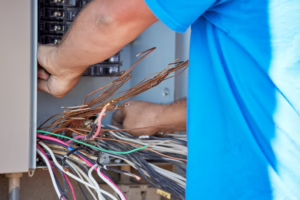
Panel troubleshooting can include checking for heat, visible damage, corrosion, incorrect breaker types, loose connections, abnormal voltage, overloaded circuits and signs that water or pests have entered the equipment. We also look beyond the panel when necessary, because a breaker that trips may be responding correctly to a fault in an outlet, appliance, fixture or branch circuit.
A repair is recommended when it restores safe, reliable operation without ignoring a broader capacity or equipment problem. Replacement may be the better option when the enclosure or bus is damaged, approved parts are no longer available, the panel shows extensive overheating or corrosion, or the service no longer supports the property’s electrical demand. HomeOps explains the evidence and the tradeoffs before work moves forward.
Repair, Replace or Upgrade?
- The issue is limited to a serviceable breaker or connection
- The panel has adequate capacity and approved parts
- There is no widespread heat, water or bus damage
- The panel is damaged, obsolete or cannot be repaired safely
- Replacement breakers are unavailable or incompatible
- Multiple defects make isolated repairs impractical
- The home is adding EV charging, electric appliances or a generator
- A load calculation shows the present service is too small
- A renovation or addition creates substantial new demand
Panel Cost, Permits and Installation Timeline
Electrical panel pricing depends on more than the amperage printed on the main breaker. The existing service, meter equipment, grounding system, panel location, circuit count, conductor condition and utility requirements all affect the scope. A straightforward equipment replacement is different from a service-capacity upgrade that also changes feeders, grounding, the meter enclosure or the connection point outside the home.
HomeOps begins with an on-site evaluation so the recommendation reflects the actual property. We document the present panel and service size, review the circuits and discuss near-term plans such as an EV charger, heat pump, electric range, pool equipment, addition or standby generator. That information helps determine whether the project should preserve the existing capacity, create more breaker space or increase the electrical service.
Older Suffolk County homes may also contain additions and renovations completed at different times. Circuit directories can be incomplete, breaker spaces may have been rearranged and equipment may not match the original service. Taking time to understand those changes makes the proposal more accurate and reduces surprises once the panel is opened.
Before quoting the work, we also review access around the panel, cable routing and the condition of nearby equipment. These practical details influence labor and help determine whether other trades, wall access or exterior work must be coordinated. The written scope should make those assumptions clear so the homeowner can compare options fairly.
Permit and inspection requirements are included in the project planning when they apply. Some installations also require coordination with PSEG Long Island for a temporary disconnect, meter work or service changes. Scheduling those steps correctly helps prevent avoidable delays and ensures the new equipment can be energized and inspected in the proper order.
The installation timeline varies with the scope and coordination involved. A technician explains what portions of the property will be without power, what access is needed and whether follow-up labeling, wall repair or utility work remains after the electrical installation. Sensitive electronics should be shut down before work begins, and the area around the panel should be kept clear.
After the work is complete, we review breaker identification, verify the installed equipment and discuss the capacity available for planned additions. The result should be more than a new metal box on the wall—it should be a documented electrical foundation that supports the way the home is used.