
National Preparedness Month • Storm Safety Guide
September is National Preparedness Month, but on Long Island, storm readiness is a year-round responsibility. A summer thunderstorm, coastal system, nor’easter, or falling tree limb can interrupt power with very little warning. Most families already know to stock batteries and charge their phones. The electrical side of the plan is where questions usually begin.
Should you turn off the main breaker? Is it safe to use a portable generator? What should you check when power returns? And when does a utility problem become a job for a licensed electrician?
This checklist is designed to give Suffolk County homeowners clear answers before, during, and after severe weather. Save it with your household emergency plan, share it with family members, and take care of electrical concerns before the next storm is already overhead.
Never enter a flooded area to reach electrical equipment, and always treat a downed power line as energized.
Before the Storm: Prepare the House, Not Just the Emergency Kit
The easiest electrical problem to handle is the one you addressed before the forecast turned serious. Walk through the home while conditions are calm and look for small warning signs that could become larger problems during an outage or voltage disturbance.
1. Know where your electrical panel is
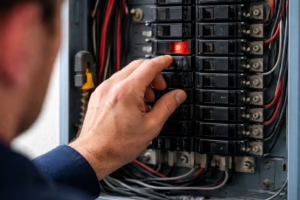
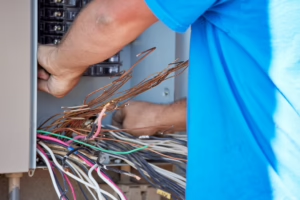
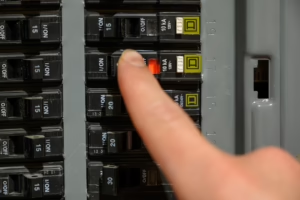
Every adult in the household should know where the main electrical panel is located and how to reach it without climbing over stored items. Keep the required working area in front of the panel clear. The circuit directory should be readable enough to identify essential areas such as the kitchen, heating equipment, sump pump, well pump, medical equipment, and bedrooms.
If the panel directory is missing or no longer matches the house, make panel labeling part of your preparedness work. Guessing at breakers during an urgent situation wastes time and can lead someone to shut off the wrong circuit.
2. Pay attention to existing warning signs
A storm does not cause every electrical problem. Sometimes it exposes a loose connection or overloaded circuit that was already developing. Schedule an evaluation if you notice recurring breaker trips, buzzing, warm outlets, flickering across multiple rooms, burning odors, discoloration, or a panel that feels unusually hot.
Those symptoms deserve attention on a normal day. If you see smoke, active sparking, or fire, leave the area and call 911.
3. Charge essential devices
Charge phones, rechargeable lights, power banks, and communication devices before the storm arrives. If someone in the home depends on electrically powered medical equipment, follow the equipment provider’s outage plan and know where you will go if backup power is unavailable. Do not assume a small consumer battery can support medical equipment unless the manufacturer specifically approves that use.
4. Protect sensitive electronics
Save important work and shut down computers properly. Unplug electronics that do not need to remain connected. A whole-home surge protective device can add a layer of protection for hardwired equipment and appliances, but no device can guarantee protection from every event or a direct lightning strike.
If you have questions about your panel or surge protection, HomeOps can evaluate the electrical system before storm season becomes outage season.
5. Review your backup-power plan
Know what your generator can actually support. Refrigeration, heat, a well or sump pump, internet equipment, and a few lighting circuits may matter more than trying to run everything at once. A planned system is safer and more useful than improvising connections after the lights go out.
Never plan to power a house by plugging a portable generator into a receptacle. That can energize wiring in an unsafe direction, a hazard known as backfeeding. Home backup power should use properly installed transfer equipment or another approved connection method.
During the Storm: Keep Distance From Electrical Hazards
Once severe weather begins, the goal is not to investigate every sound or outage. The goal is to keep people away from conditions that could be energized, hot, wet, or damaged.
Stay away from downed lines
Always treat a downed utility line as energized. Do not approach it, drive over it, or touch a fence, branch, vehicle, puddle, or other object that the line may be contacting. Keep other people away and report the hazard to 911 and PSEG Long Island.
Do not enter flooded electrical areas
Water can carry electrical current, and the surface may look harmless. Do not step into a flooded basement, garage, or yard when outlets, wiring, appliances, a panel, or service equipment may be energized. Turning off a breaker is not worth walking through water to reach it.
Use generators outdoors only
A portable generator belongs outdoors and well away from doors, windows, vents, garages, and other openings. Never run one in a house, basement, garage, shed, or partly enclosed space. Carbon monoxide cannot be seen or smelled, and open doors do not make an enclosed location safe.
Know when not to touch the panel
If the panel is dry, cool, intact, and safe to approach, you may be able to switch off a clearly identified circuit or follow instructions from emergency officials. Do not approach the panel if it is wet, hot, smoking, sparking, crackling, or visibly damaged. Keep your distance and call for help.
After the Storm: Do Not Rush to Turn Everything Back On
The weather may pass before the electrical risk does. Wind, water, falling branches, and unstable utility power can leave damage that is not obvious from inside the house.
Look from a safe distance
Before using the electrical system normally, look for a pulled service cable, damaged service mast, loose meter enclosure, water near electrical equipment, scorch marks, or branches on utility lines. Do not touch or attempt to move damaged service equipment.
Wait before reconnecting sensitive equipment
Power can return unevenly, and utility restoration may involve brief interruptions. If lights become unusually bright or dim, power is present in only part of the house, or appliances behave abnormally, turn off sensitive equipment when it is safe and contact PSEG Long Island or an electrician as appropriate.
Have water-damaged equipment evaluated
Do not plug in or energize appliances, receptacles, breakers, switches, wiring, or other electrical equipment that has been submerged or exposed to significant water. Some equipment must be replaced; other items may be eligible for professional reconditioning. That decision requires an inspection, not a visual guess.
Use your senses, but keep your distance
Burning or fishy odors, sizzling, buzzing, heat, flickering, and repeated breaker trips are warning signs. Stop using the affected circuit. For smoke, fire, active arcing, or immediate danger, leave the building and call 911.
PSEG Long Island or an Electrician: Who Should You Call?
Call PSEG Long Island for neighborhood outages, downed utility lines, damage to utility-owned equipment, or an outage affecting multiple nearby properties. Call a licensed electrician when the problem appears limited to your property, your panel, your branch circuits, customer-owned service equipment, or specific rooms and appliances.
If you cannot tell which side of the system is responsible, explain what you are seeing. HomeOps will help you identify the right next step, and immediate hazards should always go to 911 first.
A Five-Minute Electrical Preparedness Check
- Make sure the electrical panel is accessible and clearly labeled.
- Test smoke and carbon monoxide alarms according to the manufacturer’s instructions.
- Charge phones, lights, and approved backup batteries.
- Write down the numbers for PSEG Long Island, 911, and HomeOps.
- Confirm how your generator connects and what it can safely power.
- Move vulnerable electronics away from areas that may flood.
- Schedule repairs for flickering, heat, buzzing, odors, or recurring trips before the storm.
Prepare Now, So You Are Not Improvising Later
Storm preparation is not about predicting exactly what will fail. It is about removing avoidable risks and knowing who to call when the unexpected happens.
HomeOps Electric helps Suffolk County homeowners with electrical troubleshooting, panel work, generator-ready connections, surge protection, and 24/7 emergency electrical service. For backup-power planning, visit our generator installation service.
See an urgent warning sign? Call HomeOps at (631) 509-2000. For fire, smoke, active arcing, or immediate danger, leave the property and call 911 first.
Need Help Preparing Your Electrical System?
HomeOps Electric helps Suffolk County homeowners plan for storms with electrical troubleshooting, panel evaluations, surge protection, and safer generator-ready connections.