National Preparedness Month • Flood Electrical Safety
A flooded basement is already stressful. A flooded basement with outlets, appliances, wiring, or an electrical panel nearby is not a cleanup project. It is an electrical emergency.
For National Preparedness Month, HomeOps is helping Suffolk County homeowners understand a danger that is easy to underestimate after heavy rain, a coastal storm, a plumbing failure, or a sump-pump problem. Water may look calm while electrical equipment in or near it remains energized.
The most important rule is simple: do not enter the water to investigate. Start with distance, keep everyone away, and get the right professional involved.
If electrical equipment is in or near floodwater, keep your distance. Do not enter the water to reach a breaker or unplug a device.
First: Do Not Step Into the Water
If water has reached outlets, extension cords, appliances, wiring, a boiler, a sump pump, a panel, or any other electrical equipment, assume the area may be energized. Do not wade into the basement. Do not reach into the water. Do not use a metal tool, broom, or other object to move a cord or equipment.
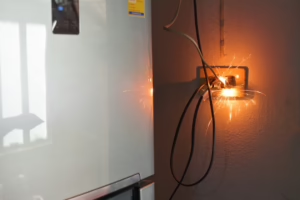
Electricity can travel through water and wet building materials. The absence of sparks or noise does not mean the area is safe.
Keep children, pets, tenants, employees, and anyone helping with cleanup away from the area. If someone is being shocked, do not enter the water or touch the person directly. Call 911.
Should You Turn Off the Main Breaker?
Only consider operating the main breaker when the electrical panel is completely dry, cool, intact, and accessible without crossing water or approaching damaged equipment. Stand to the side and use a firm motion.
Do not approach the panel if it is located in the flooded area, surrounded by water, wet, hot, buzzing, sparking, smoking, or visibly damaged. Call 911 for an immediate hazard and contact PSEG Long Island when utility disconnection is needed.
There is no prize for reaching the breaker yourself. A safe disconnection from outside the property may be required before anyone enters.
Water Reached the Electrical Panel: What Happens Next?
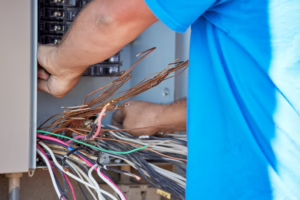
A wet electrical panel cannot be judged by wiping off the outside. Water and silt can enter breakers, connection points, the bus assembly, service equipment, and spaces that are not visible without opening the enclosure. Corrosion may continue after the surface appears dry.
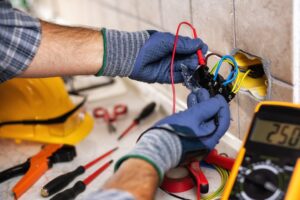
A licensed electrician should inspect the equipment before it is energized. Depending on the type and extent of exposure, affected components may require replacement. The evaluation should also look at the meter enclosure, service conductors, grounding and bonding, feeders, and nearby circuits.
Do not remove the panel cover yourself. The service side of some equipment can remain energized even when the main breaker is off.
Which Electrical Items May Be Unsafe After Flooding?
Any item that was submerged or significantly exposed to contaminated water needs professional evaluation. Common examples include:
- Circuit breakers and fuses
- Electrical panels and disconnects
- Outlets, switches, dimmers, and GFCI devices
- Extension cords, power strips, and surge protectors
- Furnaces, boilers, water heaters, pumps, and HVAC controls
- Washers, dryers, freezers, refrigerators, and other appliances
- Low-voltage controls, alarm components, and communication equipment
- EV charging equipment or battery systems located near the flooded area
Some equipment is not designed to be safely reused after submersion. Other items may be reconditioned by an appropriate professional. The correct decision depends on the equipment, the water exposure, manufacturer guidance, and applicable safety standards, not whether the item turns on.
Why “It Dried Out” Is Not a Safety Test
Floodwater is rarely clean. It can leave salt, sediment, chemicals, and other contaminants inside electrical devices. Those materials may interfere with insulation and electrical connections long after the room feels dry.
Hidden corrosion can also raise resistance at a connection, creating heat under load. An outlet or breaker may appear normal during a quick test and fail later when a larger appliance starts.
That is why powering everything back up to “see what works” is risky. Inspection comes before re-energizing.
What Homeowners Can Safely Do
Every situation is different, but these steps keep the priority where it belongs: on people, not property.
- Keep out of the affected area. Block access so nobody walks into water near electrical equipment.
- Call 911 for an active emergency. This includes fire, smoke, arcing, a person in contact with electricity, or another immediate threat.
- Contact the utility when necessary. PSEG Long Island may need to disconnect power when the service or meter area is damaged or cannot be approached safely.
- Call a licensed electrician. Explain how high the water reached and which electrical equipment was exposed.
- Document from a safe location. Photos can help with insurance, but never enter an unsafe area to take them.
- Wait for clearance before cleanup. Pumps, fans, wet vacuums, and extension cords should not be used in the area until the electrical hazard has been addressed.
What About a Sump Pump That Stopped Working?
A failed sump pump can be the reason the basement is flooding, but do not enter energized water to plug it in, reset a GFCI, or test the receptacle. The problem may be a tripped breaker, failed pump, damaged cord, overloaded circuit, or water exposure.
Once the electrical condition is made safe, the pump and its circuit can be evaluated. If basement flooding is a recurring risk, discuss backup power, alarm options, receptacle location, and circuit protection before the next event.
Who Handles What After a Flood?
Flood recovery often involves more than one company. PSEG Long Island handles utility-owned lines and equipment. An electrician evaluates customer-owned service equipment, panels, circuits, and electrical devices. Appliance or HVAC specialists may evaluate specific equipment. A water-remediation team handles drying and damaged materials after the area has been declared safe to enter.
Clear coordination matters. Restoring power too early can expose cleanup crews to hazards and damage equipment that might otherwise have been handled safely.
Questions to Ask Before Power Is Restored
- Which circuits and devices were exposed to water?
- Which equipment must be replaced?
- What can remain safely disconnected while other areas regain power?
- Does the panel or service equipment show corrosion or contamination?
- Are permits, inspections, or utility coordination required?
- What should remain off until an appliance specialist evaluates it?
Flooded Electrical Equipment in Suffolk County
Heavy rain and coastal weather can affect properties differently from one street to the next. HomeOps Electric helps Suffolk County homeowners evaluate water-exposed electrical systems, damaged circuits, panels, outlets, switches, and customer-owned service equipment.
Learn more about our 24/7 emergency electrical service and electrical panel evaluations.
If electrical equipment is in or near floodwater, keep your distance. Call HomeOps at (631) 509-2000. For fire, smoke, active arcing, electric shock, or immediate danger, call 911 first.
Need Help After Water Reaches Electrical Equipment?
HomeOps Electric can evaluate water-exposed panels, circuits, outlets, switches, and customer-owned service equipment throughout Suffolk County.