National Preparedness Month • Power Quality Guide
The lights dim, the refrigerator sounds different, and the microwave clock starts blinking. Was that a brownout, a blackout, or a power surge?
Homeowners often use those terms interchangeably, but they describe different electrical events. Each one affects the home differently, and the right response depends on what you are seeing.
For National Preparedness Month, HomeOps is breaking down the difference in plain language, plus what Suffolk County homeowners should do before plugging everything back in.
If lights become unusually bright or dim, only part of the home has power, or equipment behaves abnormally, switch off sensitive devices and call for help.
The Short Answer
- Blackout: Power is completely lost.
- Brownout: Voltage drops below the normal level, so equipment may still run poorly.
- Power surge: Voltage rises sharply for a short period.
A blackout is usually the easiest to recognize. Brownouts and surges can be less obvious, but they may place sensitive electronics, appliances, motors, and electrical equipment under stress.
What Is a Blackout?
A blackout is a complete interruption of electrical power. It may affect one home, one street, or a large portion of the utility system.
Storm damage, fallen trees, vehicle accidents, equipment failure, utility work, and grid conditions can all contribute. If the entire neighborhood is dark, the issue is likely on the utility side. If nearby homes still have power, check whether the outage is limited to your property.
What to do during a blackout
- Check PSEG Long Island’s outage information if it is safe and available.
- Keep refrigerators and freezers closed.
- Turn off or unplug sensitive electronics and large appliances.
- Use flashlights instead of candles.
- Never operate a portable generator indoors or connect it directly to household wiring.
- Leave one light on so you know when power returns.
If only part of the home is without power, breakers repeatedly trip, or lights behave strangely when electricity returns, the problem may require an electrician rather than a utility outage report.
What Is a Brownout?
A brownout is a reduction in voltage. It may be intentional, such as when a utility manages heavy demand, or it may result from a problem in the utility or property electrical system.
During a brownout, power does not necessarily disappear. Lights may dim, fans may slow down, appliances may sound strained, and electronics may restart or behave unpredictably.
Why low voltage can be a problem
Some motors and appliances attempt to keep operating even when voltage is low. That can increase heat and place additional stress on the equipment. Refrigerators, freezers, air-conditioning systems, pumps, and other motor-driven equipment may be particularly vulnerable.
If you suspect a brownout, switch off sensitive electronics and large appliances when it is safe to do so. Wait for stable power before restarting them.
When dimming may be inside the house
Not every dimming event is a utility brownout. One light dipping briefly when a large appliance starts may have a local cause. Multiple rooms becoming unusually bright and dim, repeated flickering, buzzing, heat, or partial power loss may point to a loose connection, circuit problem, service issue, or damaged equipment.
Those symptoms deserve professional evaluation. If equipment is hot, smoking, or sparking, keep away and call 911.
What Is a Power Surge?
A power surge is a sudden increase in voltage. Some surges are large and dramatic. Others are small events that happen repeatedly as motors, appliances, or electrical equipment switch on and off.
Surges can come from outside the home, including utility switching and storm-related events. They can also originate inside the property when high-demand equipment cycles.
What a surge can affect
Modern homes contain electronic controls in far more places than computers and televisions. Heating and cooling systems, ranges, refrigerators, washers, dryers, chargers, smart-home devices, garage doors, and LED lighting may all contain sensitive components.
A severe surge can cause immediate failure. Smaller repeated surges may contribute to gradual damage that is harder to connect to a single event.
Does a Power Strip Provide Enough Protection?
A basic power strip is not automatically a surge protector. Even a listed plug-in surge protector only protects the equipment connected to it and has a limited service life.
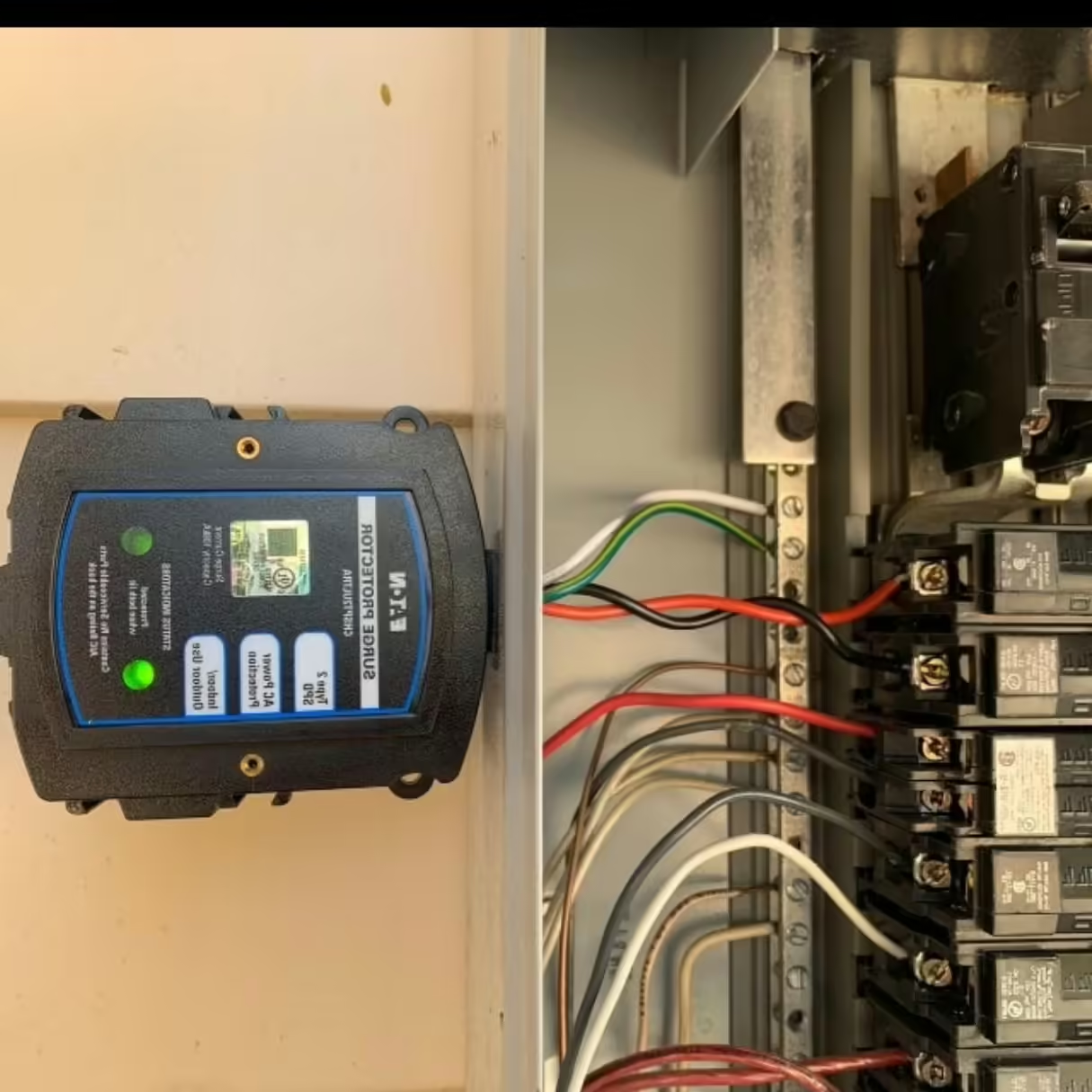
A whole-home surge protective device is installed at the electrical panel to help manage voltage spikes entering or moving through the home’s electrical system. It can provide broader protection, particularly when used as part of a layered strategy with appropriate point-of-use protection.
No surge device can promise complete protection from every event, especially a direct lightning strike. Proper grounding and bonding are also important parts of the system.
What Should You Do When Power Returns?
Resist the urge to turn everything on at once. A gradual restart is easier on the electrical system and gives you a chance to notice whether power is stable.
- Wait and observe. Make sure lights are not pulsing, unusually bright, or unusually dim.
- Reconnect essential equipment gradually. Start with the items you need most.
- Listen and smell. Buzzing, sizzling, burning odors, or abnormal appliance sounds are reasons to stop.
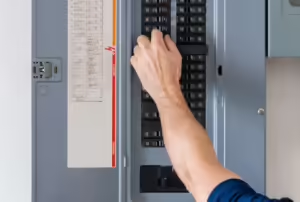
- Watch the panel. A breaker that immediately trips should not be repeatedly reset.
- Check critical systems. Confirm that refrigeration, heating equipment, pumps, alarms, and internet equipment are operating normally.
If half the house appears to have power, some lights are very bright while others are dim, or equipment is behaving abnormally, switch off sensitive devices and call for help. That pattern can indicate a serious connection or service problem.
Utility Problem or Home Electrical Problem?
Ask two questions:
- Are neighboring properties affected?
- Is the problem throughout the home or limited to specific rooms and circuits?
A widespread neighborhood outage or voltage issue should be reported to PSEG Long Island. A problem limited to your property, panel, or individual circuits may need a licensed electrician. Occasionally both the utility and an electrician must be involved.
How to Make Your Home More Power-Event Ready
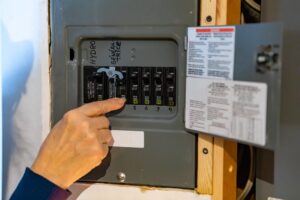
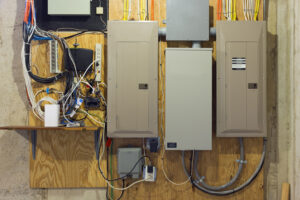
- Keep the panel accessible and accurately labeled.
- Address recurring flickering, breaker trips, heat, buzzing, and burning odors.
- Use listed surge-protection products according to their instructions.
- Consider a whole-home surge protective device.
- Plan generator or backup power before an outage.
- Test smoke and carbon monoxide alarms regularly.
- Know which circuits power refrigeration, pumps, heat, and other essentials.
Clear Answers When the Power Does Not Look Right
The difference between a brownout, blackout, and surge matters, but you do not need to diagnose the entire electrical system on your own. Start with the pattern you can safely observe: what lost power, what changed, which circuits are affected, and whether there is heat, odor, noise, or visible damage.
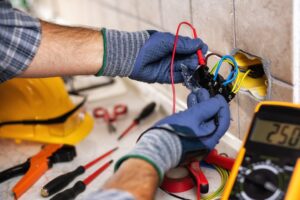
HomeOps Electric helps Suffolk County homeowners troubleshoot partial outages, flickering, panel concerns, damaged circuits, and storm-related electrical problems. We also provide 24/7 emergency electrical service, electrical panel evaluations, and generator installation planning.
Call HomeOps at (631) 509-2000. For fire, smoke, active arcing, or immediate danger, leave the property and call 911.
Power Still Acting Strangely?
HomeOps Electric helps Suffolk County homeowners troubleshoot partial outages, voltage problems, flickering lights, damaged circuits, and panel concerns.