Homeowner Guide • Suffolk County, NY
Hiring an electrician is one of those decisions where experience, licensing, and attention to detail matter. Whether you need help with a tripping breaker, an outdated electrical panel, a new EV charger, standby generator wiring, lighting, or a larger electrical upgrade, the contractor you choose will be working with one of the most important systems in your home.
For homeowners in Suffolk County, choosing the right electrician means looking beyond the lowest estimate. You want a qualified local electrical contractor who understands the work, communicates clearly, follows applicable electrical codes, and can properly handle the project from diagnosis through completion.
Here are the most important things to look for before hiring an electrician in Suffolk County.
1. Verify Their Suffolk County License
Start with licensing. Ask the electrical contractor for their license number before hiring them and make sure the information matches the company you are considering.
Suffolk County homeowners can also review contractor licensing information through the Suffolk County Division of Consumer Affairs .
HomeOps Electric Licensing
HomeOps Electric is a licensed and insured Suffolk County electrical contractor.
Suffolk County License #5153ME
Licensing becomes especially important for larger projects involving electrical panels, service upgrades, new circuits, generators, EV chargers, renovations, and other work that may require permits or inspections.
A reputable electrician should have no problem providing their licensing information.
2. Make Sure the Electrician Is Properly Insured
Licensing and insurance are not the same thing. Ask whether the electrical contractor carries appropriate insurance for the work being performed.
A professional contractor should be able to provide proof of insurance when requested. This helps protect both the homeowner and the contractor if something unexpected happens during the project.
If someone is hesitant to provide licensing or insurance information, consider that a red flag.
3. Look for Experience With Your Specific Electrical Project
Not every electrical job is the same. An electrician who regularly handles small repairs may not have the same experience with a complete electrical service upgrade. Likewise, installing a Level 2 EV charger involves different planning than replacing a light fixture.
Before hiring someone, ask whether they regularly perform the type of work you need.
- Electrical troubleshooting and repairs
- Electrical panel replacement
- 100-amp to 200-amp service upgrades
- EV charger installation
- Generator installation and wiring
- Dedicated electrical circuits
- Whole-home surge protection
- Indoor and outdoor lighting
- Ceiling fan installation
- Smoke and carbon monoxide detectors
- Home rewiring and renovations
- Commercial electrical work
Example: Installing a Level 2 EV Charger
A proper EV charger installation is not simply a matter of mounting a charger and connecting a wire.
The electrician may need to evaluate your existing electrical panel, available electrical capacity, circuit requirements, charger specifications, cable routing, installation location, and whether additional electrical upgrades are needed.
The same principle applies to standby generators, larger HVAC equipment, additions, kitchen renovations, and other projects that place additional demand on a home’s electrical system.
4. Ask How Permits and Inspections Will Be Handled
Depending on the type of electrical work and the municipality where your property is located, permits or inspections may be required.
Before approving the work, ask questions such as:
- Does this project require a permit?
- Who is responsible for obtaining the permit?
- Will an electrical inspection be required?
- Who coordinates the inspection?
- Are permit or inspection costs included in the estimate?
A qualified local electrician should be familiar with the process for the communities they regularly serve.
Be cautious if someone suggests skipping a required permit or inspection simply to save time or money.
5. Get a Clear Written Estimate
For anything beyond a very small repair, you should understand what you are paying for before the work begins.
A good electrical estimate should make it reasonably clear what work is being performed and what is included.
| What to Check | What You Want to Know |
|---|---|
| Scope of Work | Exactly what the electrician will repair, replace, install, or upgrade. |
| Labor | Whether labor is included in the quoted price. |
| Materials | What equipment, devices, wiring, panels, or other materials are included. |
| Permits | Whether permit and inspection costs are included or billed separately. |
| Potential Extras | What conditions could cause the final price to change. |
| Warranty | What workmanship or equipment warranty comes with the project. |
Electrical systems sometimes hide problems behind walls, inside panels, or within existing wiring. A professional electrician should explain known costs while also making you aware of conditions that cannot be determined until work begins.
6. Don’t Automatically Choose the Cheapest Electrician
Getting more than one estimate can make sense for a major electrical project, but price should not be the only factor.
If one quote is dramatically lower than every other estimate, find out why.
Differences in price can come from:
- The overall scope of work
- Quality of equipment and materials
- Whether permits are included
- Whether inspections are included
- Licensing and insurance
- Warranty coverage
- How much of the existing electrical system is being addressed
A cheaper estimate is not necessarily a better value if important parts of the project have been left out.
Instead of comparing the final number alone, compare the complete scope of work.
7. Check Reviews for More Than Star Ratings
Online reviews can tell you much more than whether previous customers were simply happy or unhappy.
Look for patterns in what local homeowners say about the company:
- Did they show up when promised?
- Was communication clear?
- Was the electrician professional and respectful?
- Was the work clean and organized?
- Was the problem diagnosed correctly?
- Did the company explain the repair or upgrade?
- Did customers mention using them again?
- Did the company respond appropriately when there was a problem?
A long history of detailed local reviews gives you considerably more information than a contractor with only a handful of ratings.
8. Pay Attention to Communication Before the Job Starts
How a contractor communicates before you hire them often tells you what to expect after the project begins.
A professional electrical company should be able to clearly explain:
- What they found
- What they recommend
- Why the work is needed
- What alternatives may be available
- What the project involves
- What you should expect next
You should not feel pressured into approving electrical work you do not understand.
If something is wrong with your electrical system, the electrician should be able to explain the issue in terms that make sense.
9. Ask About Warranties
Before approving a larger project, ask what type of warranty comes with the work.
Find out whether the warranty applies to:
- Labor
- Installed equipment
- Manufacturer parts
- Both parts and labor
You should also know who to contact if there is a problem after the job has been completed.
A contractor’s willingness to stand behind their work is an important consideration when comparing electrical companies.
10. Choose an Electrician Who Understands Suffolk County Homes
Local experience matters. Homes throughout Suffolk County vary significantly in age, electrical capacity, wiring methods, previous renovations, and the amount of electricity today’s homeowners expect them to support.
Modern Suffolk County homes may need to power:
- Central air conditioning
- Electric cooking appliances
- Multiple refrigerators or freezers
- Home offices
- Pool equipment
- Hot tubs
- Level 2 EV chargers
- Standby generators
- Smart home equipment
- Large entertainment systems
Older electrical systems were not always designed around today’s electrical demands.
A local electrician who regularly works throughout Suffolk County can evaluate the complete electrical system rather than looking only at the individual device or circuit being added.
12 Questions to Ask Before Hiring an Electrician
- Are you licensed to perform electrical work in Suffolk County?
- What is your license number?
- Are you insured?
- Have you completed projects like mine before?
- Does this job require a permit or inspection?
- Who handles the permit and inspection process?
- What exactly is included in the estimate?
- Could anything cause the price to change?
- What equipment or materials will be installed?
- What warranty comes with the work?
- Who should I contact if I have a problem afterward?
- How long do you expect the project to take?
You do not necessarily need to interrogate your electrician with twelve questions. The point is that a professional contractor should be comfortable discussing them.
Red Flags When Hiring an Electrician
There are also warning signs worth paying attention to before allowing someone to work on your electrical system.
- They will not provide a license number
- They cannot provide proof of insurance
- They refuse to put a major project’s scope in writing
- They pressure you into making an immediate decision
- They suggest avoiding a required permit or inspection
- They provide an unusually low quote without explaining why
- They cannot clearly explain what work they intend to perform
- There is little evidence of previous local work
- Their business information is inconsistent online
- They want to perform major electrical work without evaluating the existing system
Electrical work is not a good place to take unnecessary chances.
When Should You Call an Electrician Right Away?
Some electrical problems should not be ignored. Contact a qualified electrician if you notice issues such as:
- Burning or unusual electrical odors
- Sparking outlets or switches
- Frequently tripping breakers
- Buzzing or crackling from the electrical panel
- Warm or discolored outlets
- Flickering lights throughout the home
- Partial loss of power
- Outlets that suddenly stop working
- Signs of overheating around electrical equipment
Electrical Safety Comes First
If you believe there is an immediate fire or electrical hazard, keep your distance from the affected equipment and treat the situation as an emergency.
Choosing an Electrician for Panels, EV Chargers, and Generators
Larger electrical upgrades deserve additional planning. These projects often affect more than one circuit or piece of equipment and may require an evaluation of the home’s overall electrical capacity.
Electrical Panel Upgrades
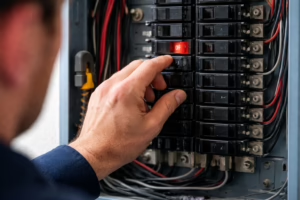
If your electrical panel is outdated, overloaded, damaged, or no longer has enough capacity for your home’s needs, an electrician should evaluate both the panel and the electrical service supplying it.
A panel replacement and a complete electrical service upgrade are not always the same project.
Learn more about electrical panel upgrades in Suffolk County .
EV Charger Installation
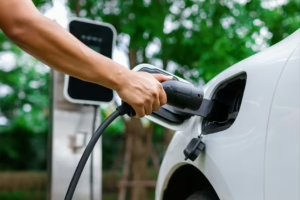
Before installing a Level 2 EV charger, your electrician should determine whether the existing electrical system can safely support the additional load and whether a dedicated circuit, load management equipment, or panel upgrade is necessary.
Standby Generator Installation
Generator installations may involve generator sizing, electrical connections, transfer equipment, permits, inspections, and coordination with other parts of the property.
For these types of projects, choose an electrical contractor who regularly performs the complete installation rather than someone learning the process on your home.
Looking for a Licensed Electrician in Suffolk County?
HomeOps Electric provides residential and commercial electrical services throughout Suffolk County, Long Island.
Our electricians handle everything from troubleshooting everyday electrical problems to larger upgrades involving electrical panels, EV chargers, generators, lighting, dedicated circuits, rewiring, and modern electrical systems.
HomeOps Electric is licensed and insured in Suffolk County under License #5153ME.
If you need electrical work at your home or business, our team can evaluate the problem, explain your options, and help you determine the right next step.
Frequently Asked Questions About Hiring an Electrician
How do I check if an electrician is licensed in Suffolk County?
Ask the contractor for their license number and verify the information through the Suffolk County Division of Consumer Affairs. A legitimate electrical contractor should be comfortable providing their licensing information before you hire them.
Should I get multiple estimates for electrical work?
For larger projects such as electrical service upgrades, panel replacements, generators, EV charger installations, or extensive renovations, comparing estimates can be useful. Make sure you compare the complete scope of work rather than price alone.
Should an electrician provide proof of insurance?
A professional electrical contractor should be able to provide appropriate licensing and insurance information when requested. Licensing and insurance serve different purposes, so it is worth asking about both.
Does electrical work require a permit in Suffolk County?
Permit and inspection requirements can depend on the type of electrical work and the municipality where the property is located. Ask your electrician whether your specific project requires a permit or inspection and who will be responsible for handling the process.
What should I look for when choosing an electrician?
Look for proper licensing and insurance, experience with your type of project, clear communication, detailed estimates, strong local reviews, appropriate permit handling, and a contractor willing to stand behind their work.
Is it worth hiring a local Suffolk County electrician?
Local electricians who regularly work in Suffolk County are familiar with the area’s homes, electrical systems, common upgrade needs, and local project requirements. That experience can be especially valuable for troubleshooting, panel upgrades, renovations, EV charger installations, and generators.
The Bottom Line
Choosing an electrician should come down to more than who can get there first or who gives you the lowest number.
Verify licensing and insurance, make sure the contractor has experience with your specific project, understand what is included in the estimate, ask about permits and warranties, and pay attention to how clearly the electrician communicates with you.
A little homework before hiring can help you choose an electrical contractor you feel confident trusting with your Suffolk County home.