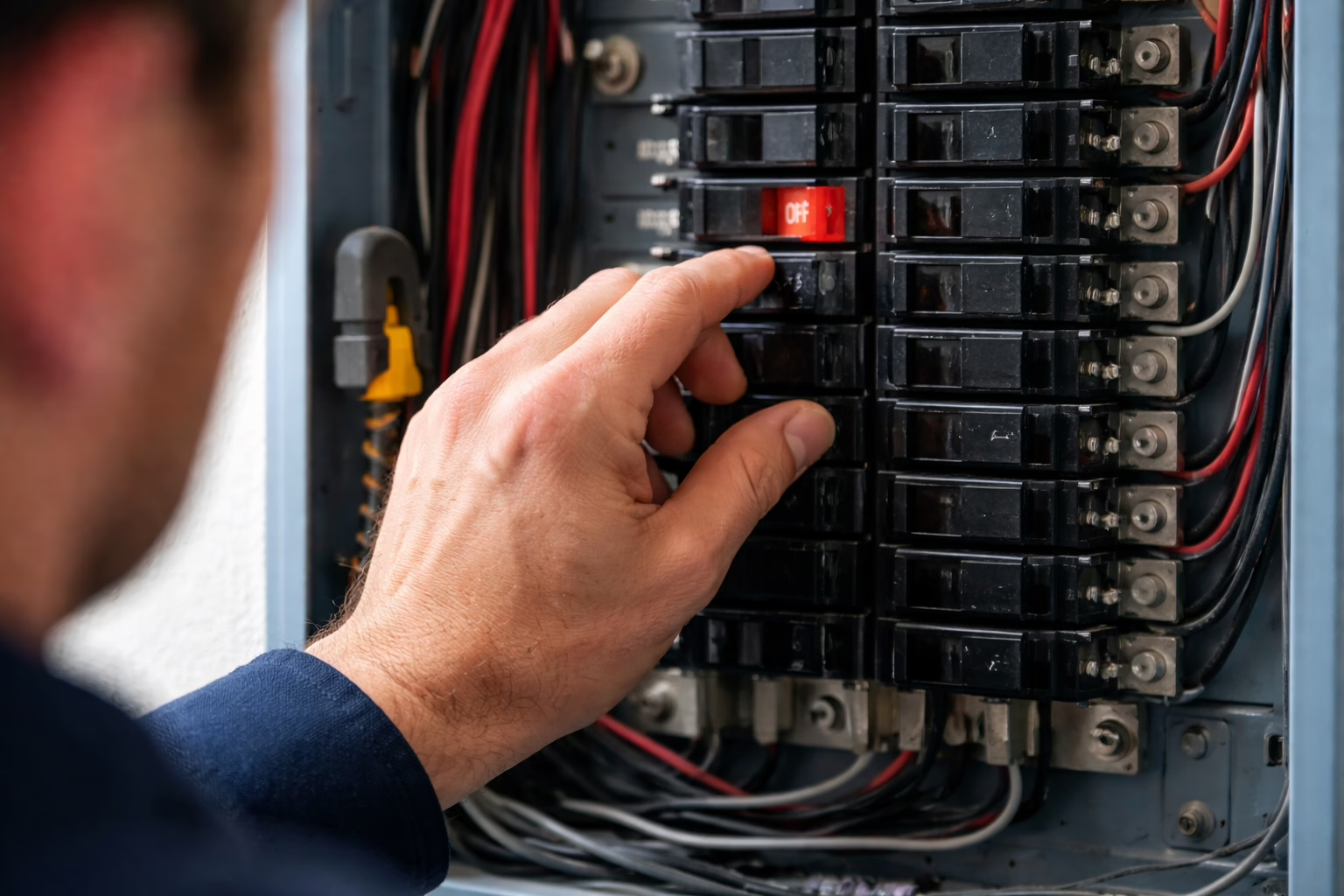
If your circuit breaker keeps tripping, it’s not random — and it’s not something you should ignore.
Your breaker is a safety device. When it trips, it’s protecting your home from overheating wires, short circuits, or potential electrical fires.
But when it happens repeatedly, that’s a signal something deeper is going on.
In Suffolk County homes — especially those built between the 1970s and early 2000s — breaker issues are one of the most common calls we receive for electrical repairs.
Let’s break down why it happens, what it really means, and when it’s time to call a licensed electrician.
What a Circuit Breaker Actually Does
Your breaker monitors electrical flow on each circuit in your home. If the current exceeds safe limits, it shuts off power instantly.
It does this to prevent:
- Overheated wiring
- Melted insulation
- Electrical arcing
- Fire hazards
According to the National Fire Protection Association (NFPA), electrical failures or malfunctions are one of the leading causes of home fires in the United States. Breakers exist specifically to stop those situations before they escalate.
There are three primary reasons a breaker trips:
| Cause | What It Means | Risk Level |
|---|---|---|
| Overload | Too many devices drawing power on one circuit | Moderate |
| Short Circuit | Hot wire contacts neutral wire | High |
| Ground Fault | Current escapes intended electrical path | High |
Understanding which category you’re dealing with determines whether it’s a simple fix — or a larger repair.
1. Overloaded Circuits (Most Common)
Overloading happens when you plug too many power-hungry devices into one circuit.
This is especially common in Suffolk County homes built decades ago, before modern electrical demands increased dramatically.
Common Overload Scenarios:
- Space heaters during winter
- Air fryers + microwaves + coffee makers on one kitchen circuit
- Hair dryers in older bathrooms
- Garage refrigerators sharing circuits
- Basement dehumidifiers running continuously
- Window AC units on standard 15A circuits
In older homes, kitchens often had only 1–2 circuits total. Today, we plug in 6–10 high-wattage appliances daily.
If your breaker trips only when certain devices run together, overloading is likely the cause.
Solution Options:
You may need:
- Circuit redistribution
- Dedicated appliance circuits
- Panel capacity evaluation
- A panel upgrade if your service is undersized
In many cases, adding a dedicated circuit solves the issue completely.
2. Short Circuits (More Serious)
Short circuits occur when a hot wire touches a neutral wire.
This causes a sudden surge of current, and the breaker shuts off instantly.
Short circuits are typically caused by:
- Damaged insulation
- Rodent-chewed wiring
- Loose connections
- Faulty outlets
- Internal appliance failure
- Aging wiring inside walls
If your breaker trips immediately upon reset, and continues to trip with nothing plugged in, a short circuit is likely.
These require professional diagnostics.
Short circuits can generate intense heat quickly. According to the U.S. Consumer Product Safety Commission, electrical arcing and short circuits are major contributors to residential electrical fires.
3. Ground Faults
Ground faults happen when electricity flows outside its intended path.
These are especially common in:
- Bathrooms
- Kitchens
- Basements
- Outdoor outlets
- Garages
Moisture increases the likelihood of ground faults.
Ground faults are what GFCI outlets are designed to detect.
If your breaker or GFCI trips in damp conditions, moisture intrusion may be the cause.
Ground faults are safety-critical because they increase shock risk.
Why Breaker Problems Are Common in Suffolk County
Local factors matter.
Many Suffolk County homes have:
- 100-amp service panels
- Aging breaker technology
- Aluminum branch wiring in some developments
- Corrosion from coastal air exposure
- DIY modifications over the years
If you’ve added:
- An EV charger
- A standby generator
- High-powered kitchen appliances
- Hot tubs or pools
Your system may now be operating at capacity.
Breakers trip when your system has no safety margin left.
When It’s Time for a Panel Upgrade
Electrical repairs fix symptoms.
Panel upgrades fix capacity.
If you have:
- A 100-amp panel
- Multiple breaker trips weekly
- Double-tapped breakers
- Breakers that feel warm
- A Federal Pacific or Zinsco panel
- Plans to install EV charging or a generator
Your system may simply be undersized.
A properly sized 200-amp panel increases capacity and safety.
Learn more about electrical panel upgrades in Suffolk County
Warning Signs That Require Immediate Attention
Call immediately if you notice:
- Burning smell from panel
- Warm breakers
- Buzzing sounds
- Breaker won’t reset
- Visible sparking
- Smoke
- Partial power loss in multiple rooms
These are not “wait and see” issues.
Electrical fires can start inside walls, where damage is not visible.
If you suspect overheating, shut off the main breaker and call a licensed electrician.
HomeOps offers 24/7 emergency electrical service throughout Suffolk County.
Quick Troubleshooting Checklist (Safe Steps Only)
Before calling, you can safely check:
✔ Is a high-watt appliance plugged in?
✔ Did the breaker trip during heavy appliance use?
✔ Does it trip immediately when reset?
✔ Is there moisture present?
✔ Is the breaker physically loose?
Never:
✘ Open the panel cover
✘ Replace breakers yourself
✘ Tape a breaker “on”
✘ Ignore repeated trips
Electrical safety is not DIY territory.
The Long-Term Cost of Ignoring Breaker Trips
Ignoring breaker problems can lead to:
- Burned wiring
- Appliance damage
- Panel failure
- Insurance claim complications
- Fire hazards
Repeated breaker trips are not just annoying — they’re your system asking for help.
Repairs vs Upgrades: Making the Smart Call
Here’s a simple comparison:
| Scenario | Best Solution |
|---|---|
| Single breaker tripping occasionally | Repair or circuit redistribution |
| Kitchen overload issues | Dedicated circuits |
| Panel near capacity | Service upgrade |
| Adding EV + generator | 200-amp panel recommended |
| Obsolete panel brand | Full replacement |
If you’re unsure, a diagnostic evaluation clarifies everything.
Final Thoughts
A tripping breaker is a warning.
The key question isn’t “How do I stop it?”
It’s “Why is it happening?”
Professional troubleshooting ensures your system is safe — not just functional.
If your circuit breaker keeps tripping in Suffolk County, don’t ignore it.
Schedule a professional evaluation with HomeOps Electric today.
Frequently Asked Questions
Get quick answers about breaker trips, electrical safety, and when to call a licensed Suffolk County electrician.
+Why does my circuit breaker keep tripping?
+Is it dangerous if a breaker trips repeatedly?
+What’s the difference between an overload, short circuit, and ground fault?
- Overload: too many devices drawing power on one circuit.
- Short circuit: hot wire contacts neutral, causing a sudden surge of current.
- Ground fault: electricity escapes the intended path, often due to moisture or damaged insulation.