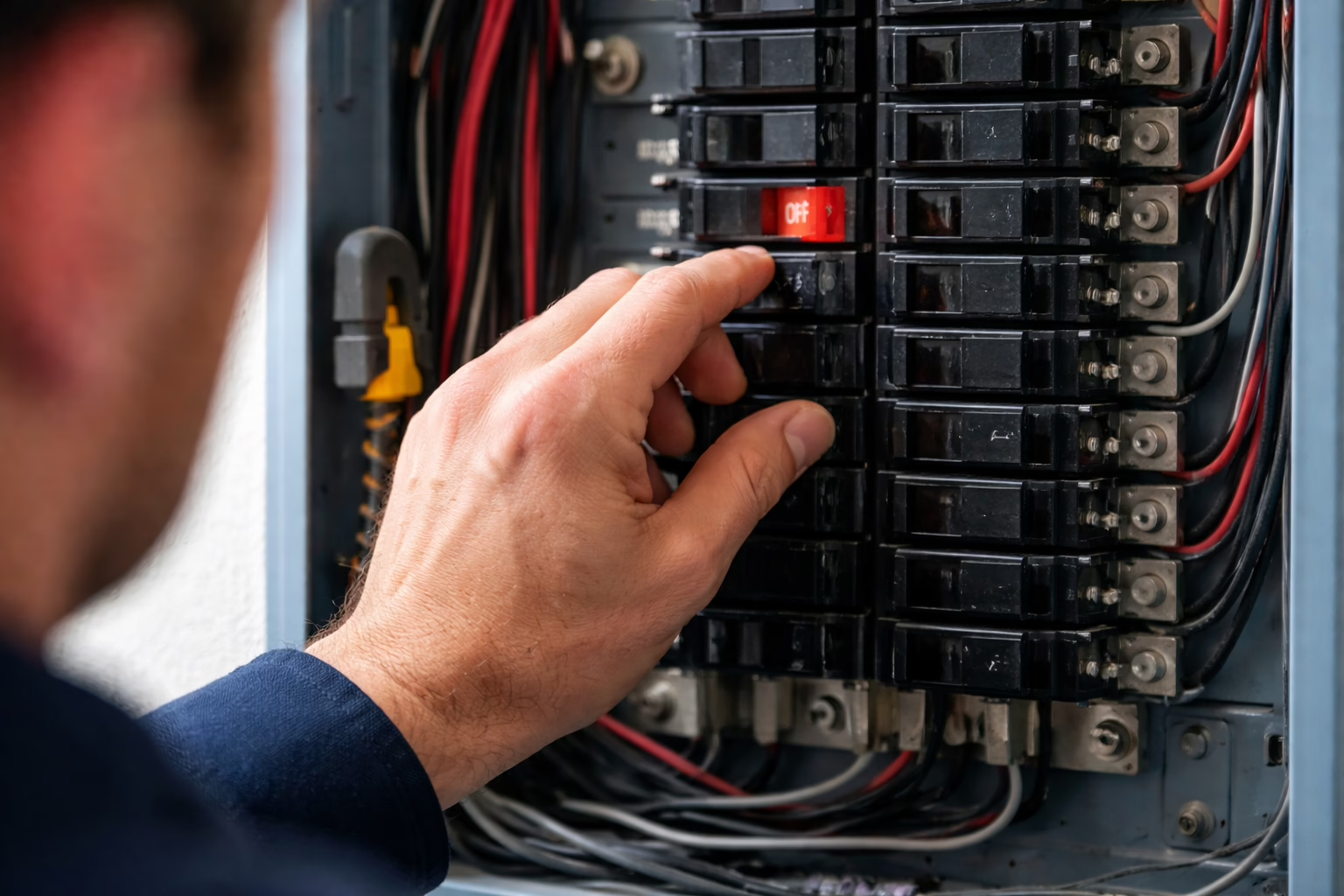
Most homeowners have seen their electrical panel.
Fewer actually know what it does.
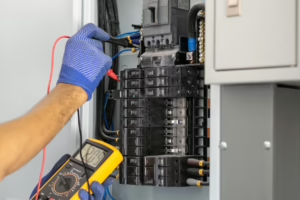
It’s easy to ignore until a breaker trips, the lights flicker, or you start planning a project like an EV charger, generator, or kitchen renovation. But your electrical panel plays one of the most important roles in your home. It controls how power is distributed, protects circuits from unsafe conditions, and helps your electrical system operate safely every day.
If your panel is outdated, overloaded, or simply too small for modern electrical demand, the rest of your home can start to feel the effects.
Understanding how an electrical panel works can help you recognize warning signs earlier, make better upgrade decisions, and understand why so many modern homes eventually need panel repairs, installations, or upgrades.
What Is an Electrical Panel?
An electrical panel is the main distribution point for electricity inside your home.
Power comes in from the utility company, passes through your electrical meter, and then enters the panel. From there, the panel sends electricity out to the circuits that power the rest of the house.
That includes things like:
- lights
- outlets
- kitchen appliances
- laundry equipment
- HVAC systems
- garage circuits
- bathroom GFCIs
- outdoor power
- office equipment
- specialty equipment like EV chargers or standby generators
In simple terms, your panel is the place where your home’s power is organized, controlled, and protected.
Without it, electricity would have no safe way to be distributed throughout the property.
Why the Electrical Panel Matters So Much
Homeowners often think about the electrical panel only when something goes wrong.
But the panel affects nearly everything in the home.
If it’s functioning properly, you usually don’t notice it.
If it’s not, you may start seeing issues like:
- breakers tripping often
- lights dimming when appliances start
- buzzing sounds near the panel
- circuits not keeping up with demand
- limited room for new circuits
- difficulty adding modern upgrades
That’s because the panel is not just a box full of breakers. It’s the foundation of the entire electrical system.
If the foundation is undersized, outdated, or failing, the problems can spread throughout the house.
How Electricity Moves Through the Panel
To understand the role of the panel, it helps to understand the path electricity takes.
Step 1: Power enters the home
Electricity comes in from the utility service line.
Step 2: Power passes through the meter
This is where electrical usage is measured.
Step 3: Power enters the main breaker
The main breaker controls power to the entire panel and can shut down the whole home if necessary.
Step 4: Power is distributed to branch circuits
Each breaker controls a separate circuit or zone of the home.
Step 5: Circuits power the home
Electricity moves to outlets, switches, lighting, appliances, and equipment throughout the property.
The panel manages this distribution safely while breakers monitor each circuit for overloads and faults.
Main Parts of an Electrical Panel
What Circuit Breakers Actually Do
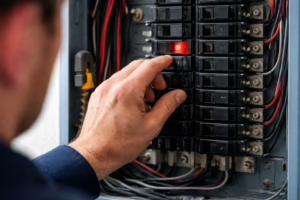
Circuit breakers are safety devices.
Their job is to shut off electricity when something unsafe happens.
That could mean:
- too much electrical demand on a circuit
- a short circuit
- a ground fault
- a damaged breaker
- a wiring issue
When a breaker trips, it’s not random. It’s responding to a condition that could become dangerous if power continued flowing.
This is why repeated breaker trips should never be treated as “normal.”
They are one of the clearest signs that the electrical system needs attention.
Electrical Panel vs Fuse Box
Some older homes still have fuse boxes instead of modern breaker panels.
Both systems are designed to protect circuits, but they work differently.
Fuse boxes
A fuse contains a thin metal strip that melts when current becomes unsafe. Once it blows, the fuse must be replaced.
Breaker panels
A breaker trips off and can usually be reset once the problem is addressed.
Modern breaker panels are generally safer, more practical, and better suited to current electrical demands. If a home still uses an older fuse box, that often becomes an important sign that a panel replacement or new panel installation may be worth considering.
Why Older Panels Struggle in Modern Homes
A lot has changed in the average home over the last few decades.
Older homes were not designed for the amount of electricity many families now use every day.
Today’s homes often include:
- central air conditioning
- electric cooking appliances
- large refrigerators
- microwaves and countertop appliances
- washers and dryers
- home office equipment
- gaming systems and televisions
- EV chargers
- standby generators
- smart home devices
- extra circuits for finished basements or additions
That growing demand puts real pressure on older electrical systems.
A panel that once handled the home just fine may now be operating at or near its limits.
100 Amp vs 200 Amp Service
Many older homes still have 100 amp service.
In some homes, that may still be enough. But in many others, it becomes a limitation as electrical demand increases.
A 200 amp panel provides more room for:
- added circuits
- high-demand appliances
- HVAC upgrades
- EV charger installation
- generator integration
- future renovations
That’s why panel upgrades are so common in homes being modernized.
If a homeowner is planning a major electrical addition, panel capacity should be one of the first things evaluated.
Signs the Panel May Be the Real Problem
Sometimes homeowners focus on the symptom and not the source.
A tripping breaker may seem like a circuit problem. Flickering lights may seem like a lighting problem. But many of these issues trace back to the panel itself.
Common warning signs include:
- frequent breaker trips
- flickering or dimming lights
- buzzing near the panel
- warm breakers
- burning smells
- partial power loss
- no room for new circuits
- issues after adding appliances or equipment
These signs don’t always mean the panel needs full replacement. Sometimes the issue is repairable. Other times, the panel is simply too old or too small for the home’s needs.
When a Panel Needs Repair, Installation, or Upgrade
This is where homeowners often get confused.
Panel repair
A repair may be appropriate when the issue is isolated, such as:
- faulty breaker
- loose connection
- minor component issue
- localized panel problem
Panel installation
Installation is often needed for:
- new construction
- full replacements
- major renovations
- damaged panels
- new service setups
Panel upgrade
An upgrade is usually needed when:
- capacity is too low
- the home is moving from 100 amp to 200 amp service
- new loads are being added
- modern electrical expansion is planned
The right solution depends on the panel’s age, condition, and ability to support the home safely.
Why Panel Knowledge Matters for Homeowners
Most homeowners are not expected to be electricians.
But understanding the role of the panel helps you make smarter decisions when something starts going wrong.
It helps explain:
- why breakers trip
- why lights flicker
- why some homes need upgrades before adding new equipment
- why panel issues can affect the entire home
- why electrical work often starts at the panel
That makes this one of the most important systems in the house to understand — even at a basic level.
Electrical Panels and Future Home Upgrades
Many homeowners first discover their panel limitations during another project.
Common examples include:
- installing an EV charger
- adding a standby generator
- replacing an HVAC system
- renovating a kitchen
- finishing a basement
- creating a home office
- expanding laundry or appliance circuits
These projects increase electrical demand. If the panel can’t support them, the project may require repair, installation, or upgrade work first.
That’s why the panel often becomes the starting point for broader home improvement planning.
Final Thoughts
Your electrical panel does far more than most homeowners realize.
It distributes power, protects circuits, supports every room in the home, and determines whether your system can safely keep up with modern demand.
If it’s working well, your home feels stable and reliable.
If it’s not, you may start to see warning signs throughout the property.
Understanding what the panel does is the first step toward making better decisions about electrical safety, capacity, and future upgrades.
If you’re seeing repeated breaker trips, flickering lights, limited circuit space, or difficulty adding new equipment, it may be time to have your panel evaluated by a licensed electrician.
Electrical Panel FAQ
Here are answers to common questions homeowners ask about what electrical panels do, how they work, and when they may need repair, installation, or upgrades.